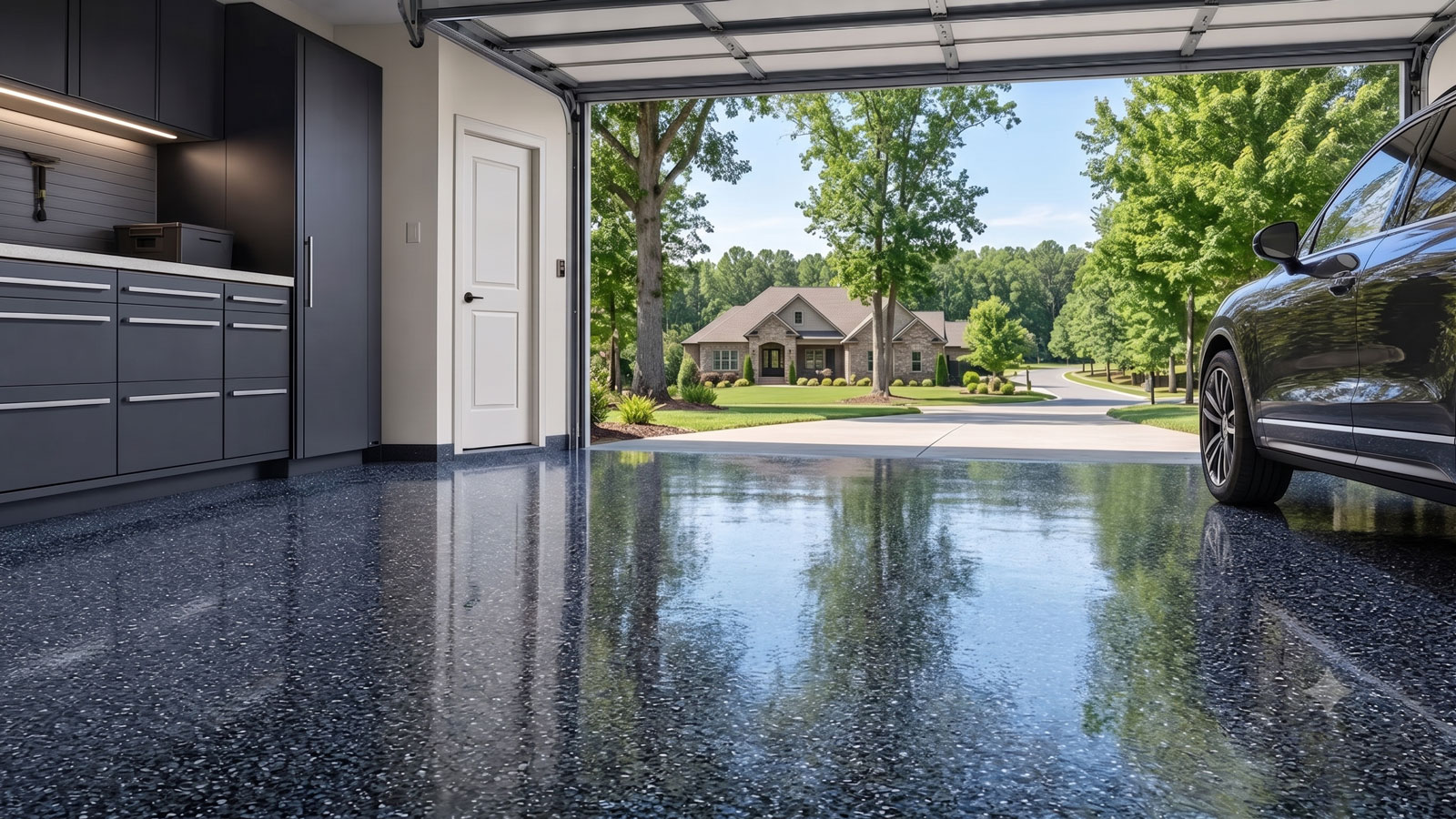
Garage Floor Coating in Summit, NJ
Floor Coating Services in Summit, NJ
Summit's stormwater office provides unusually quantitative local context: the city estimates that one inch of rain produces more than 100 million gallons of runoff across Summit, with about 105 municipal outfalls and 13 subwatersheds. The city describes several drainage management areas. Those statistics make runoff planning tangible but cannot determine if any particular garage slab contains moisture or whether its doorway floods.
Summit includes older and modified residential properties where an attached or detached garage may have been built, painted, repaired or repoured at a different time from the home. For floor coating, the direct evidence is the surface: oil, old finishes, weak patches, spalling and control joints. A responsible installer identifies what must be ground away or repaired and distinguishes stormwater traveling across the driveway from dampness arising within the concrete.
NJDOT winter salt and brine can produce slushy deposits when vehicles return during snow or ice. Once the floor has been prepared and exterior water problems addressed independently, compare a complete epoxy or polyaspartic system for surface texture, winter cleaning, direct sunlight at the garage opening and cure schedule. A large citywide stormwater number supports better questions; it does not justify an automatic moisture barrier or one-size-fits-all installation.
Local Market Insight
Summit reports over 100 million gallons of runoff from one inch of citywide rain, 105 outfalls and 13 subwatersheds. These are municipal runoff figures, not a slab test; an estimate should focus on garage-apron flow, old finishes, sound concrete and winter residues.
What Affects the Cost of Garage Floor Coating in Summit?
Summit's stormwater figures—more than 100 million gallons of runoff from one inch of rain, 105 outfalls and 13 subwatersheds—describe citywide drainage. They do not set a moisture level for any one garage, so avoid translating the figures into a blanket price premium.
A Summit estimate should identify the floor's past paint, old repairs, mechanical preparation, movement joints, threshold water and actual exposure to winter salt and sun. Exterior drainage corrections and coatings belong in separate scope items.
Garage floor coating prices can vary from one Summit home to another. The size of the garage matters, but so does the condition of the concrete, the amount of preparation needed, and the type of coating or finish you choose. A professional installer usually needs to see the floor before giving an accurate quote.
- Citywide runoff scale: Summit estimates more than 100 million gallons from a one-inch rain. This motivates threshold inspection, but a municipal volume is not evidence of individual slab vapor.
- 105 outfall locations: A city with mapped outfalls can still have private low aprons. Check the actual garage entry rather than assuming a nearby public drain prevents water entry.
- Thirteen local subwatersheds: The city's stormwater plan divides drainage across 13 subwatersheds; which basin the house occupies does not determine old coating adhesion or grinding needs.
- Prior concrete finish and repairs: Summit garages can have painted slabs, patch materials or concrete poured after the house. Inspection should identify incompatible old layers, cracks and moving joints.
- Deicing exposure: NJDOT winter salt and brine may leave deposits. Remove contamination before resin application and expect routine post-installation grit cleaning.
- Use and cure time: Doorway UV stability, texture, perimeter access, steps and return-to-parking time can affect the complete system price.
Call for a clear, project-specific estimate — or request one online.
Summit's Thirteen Subwatersheds and Garage Door Runoff
Summit's municipal stormwater page provides three numerical anchors: an inch of rain can produce more than 100 million gallons of runoff citywide; the stormwater system contains 105 outfalls; and its drainage is organized across 13 subwatersheds. Those figures make the scale of urban drainage apparent in a way a generic climate paragraph cannot.
But these are infrastructure statistics, not the results of a test on a homeowner's slab. A garage can be dry inside even when the city has busy stormwater systems. Conversely, a driveway may direct water beneath the garage door independently of its distance from a mapped municipal outfall.
Observe the threshold in heavy rain and distinguish runoff from water left on the floor by a parked vehicle. Look for recurring mineral marks, old paint failures and damp corners, but do not attribute them automatically to the town's watershed network. If exterior flow is persistent, address it independently of floor-coating installation.
A quote based on Summit's actual property should list drainage exclusions, any relevant slab testing, removal of old floor paint, grinding, repair of stable chips, treatment of control joints and the complete finish specification. A coating cannot reduce the city's one-inch storm runoff.
Summit Winter Street Treatment, Garages and Surface Preparation
NJDOT uses rock salt, brine and calcium chloride in its winter roadway work. Summit vehicles can carry meltwater and gritty salt into garages repeatedly, creating both preparation and maintenance questions independent of the city's stormwater maps.
An existing painted floor can retain contaminated layers, oil or loose patches; the installer must remove what prevents bonding and create the manufacturer's specified concrete profile. A later garage slab can differ from the house's build date, so neighborhood age is not a reliable shortcut.
Check how the coating treats stable cracks versus moving joints and how grinding reaches around stored equipment, steps and door-frame edges. These labor details matter even when a quote advertises a straightforward price per square foot.
Finally, choose a finish for traffic, traction and sunlight at the opening, and confirm return-to-foot-traffic and return-to-vehicle times separately. The complete coating system and installation conditions are more important than a generic promise that polyaspartic is always superior to epoxy.
Frequently Asked Questions
Does one inch of rain really produce 100 million gallons across Summit?
That is the citywide estimate in Summit's stormwater materials. It describes overall runoff, not how much water reaches any single driveway or garage.
Will being in one of Summit's 13 subwatersheds affect my epoxy adhesion?
Not automatically. Adhesion depends on concrete condition and proper preparation. Actual water entry or old coating failure must be evaluated at the property.
Do Summit's 105 outfalls prevent my garage threshold from flooding?
Municipal outfalls serve public drainage. A private apron can still direct water toward a garage; observe the site rather than relying on city totals.
How should winter salt be managed on a coated floor?
NJDOT deicing residue may arrive on tires. Contamination needs removal before coating and ongoing cleaning afterward in line with the manufacturer's instructions.
Which details make two Summit bids comparable?
Surface profiling, old finish removal, cracks and joints, perimeter and threshold work, topcoat, traction, cure conditions and realistic vehicle return time.
Summit Neighborhoods & Local Context
Phone Quote Line
Speak with a floor coating specialist about your project and get a realistic estimate range.
(973) 888-1098Typical Project Cost
$3,000–$5,500
Typical range for a two-car garage. Final pricing depends on floor size, concrete condition, prep work, coating type, and finish options.
Helpful Guides
Other Service Areas