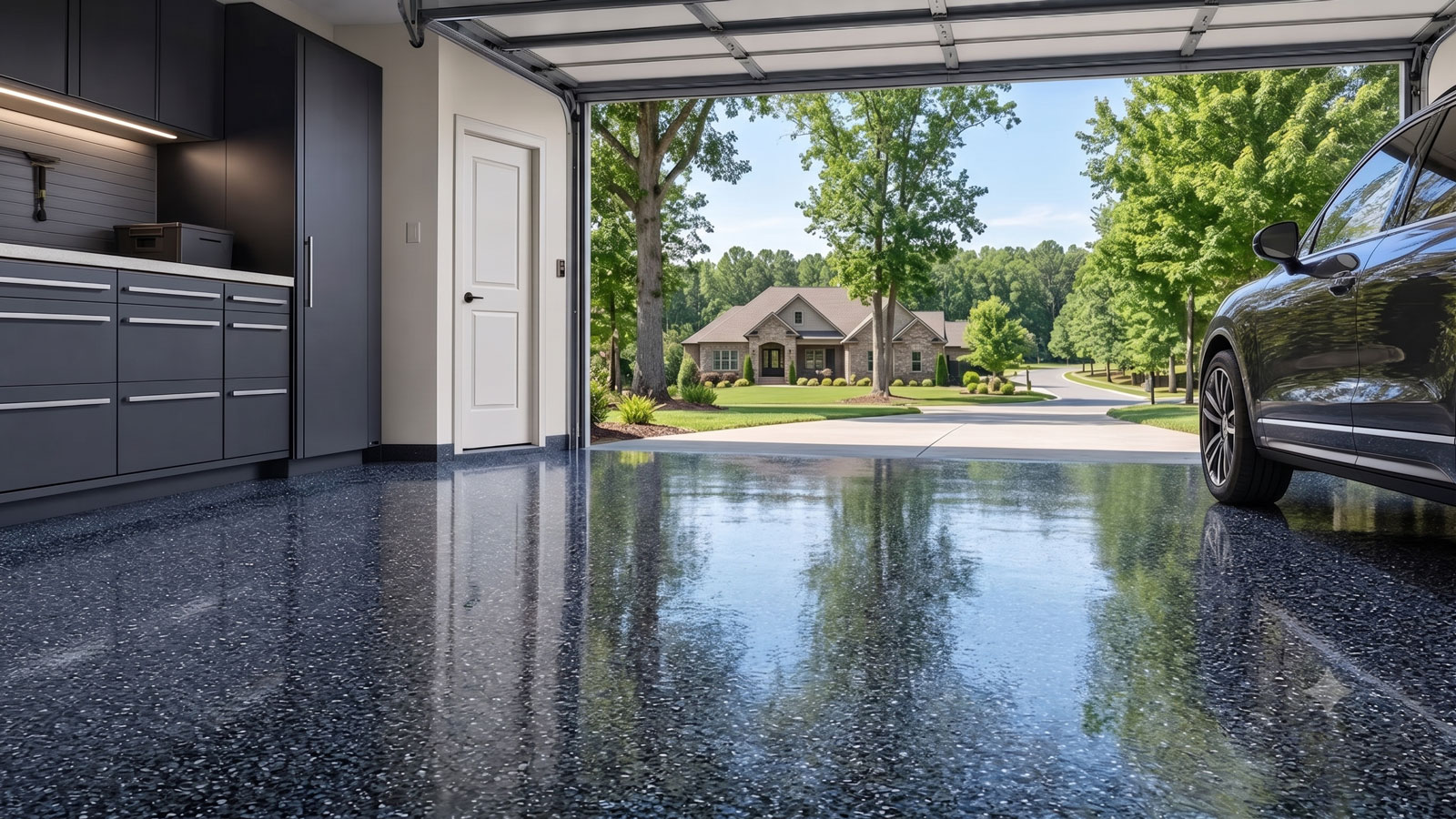
Garage Floor Coating in Livingston, NJ
Floor Coating Services in Livingston, NJ
Livingston operates a documented municipal stormwater program under New Jersey's Tier A permit system. Its published stormwater resources identify permit NJ0141852 and provide municipal drainage and outfall maps, together with local stormwater ordinances updated in 2021 and 2024. Those sources describe how the township manages polluted runoff; they do not identify concrete moisture or floor-coating suitability in any one Livingston garage.
The town's established residential setting means garages can have different renovation and use histories even within a neighborhood. Existing paint, sealer, tire marks, patch compounds, cracks and moving joints matter more to a coating than a township-wide drainage category. During a site visit, distinguish ordinary wet-tire puddles from water that repeatedly flows beneath the door, and keep any exterior grading or drainage correction separate from the coating estimate.
Winter NJDOT salt and brine can arrive on vehicles, while sun at an open entry can affect the selection of a UV-stable final coat. Ask which preparation method reaches a sound concrete profile, how previous layers will be removed and whether edges, storage obstructions, threshold transitions and cure-time limits are covered. These property-specific answers make a meaningful comparison of epoxy and polyaspartic systems possible.
Local Market Insight
Livingston publishes Tier A permit NJ0141852, outfall mapping and stormwater ordinances updated in 2021 and 2024. That establishes municipal runoff management; each homeowner still needs an observed drainage and concrete-preparation assessment before coating.
What Affects the Cost of Garage Floor Coating in Livingston?
Livingston's Tier A stormwater permit and its municipal outfall network are evidence of public drainage management, not readings from a private garage slab. Scope costs around real threshold runoff and the condition of existing paint, repairs, joints and surface contaminants.
A quote should separately detail removal of old coatings, concrete profiling, stable defect repairs, entry edges, the complete resin layers and vehicle-return timing. The permit number does not change material performance or a concrete diagnosis.
Garage floor coating prices can vary from one Livingston home to another. The size of the garage matters, but so does the condition of the concrete, the amount of preparation needed, and the type of coating or finish you choose. A professional installer usually needs to see the floor before giving an accurate quote.
- Tier A permit NJ0141852: Livingston publishes its stormwater permit identification and related plans. Those govern municipal infrastructure and pollution control; a garage floor still needs site-specific inspection.
- 2021 and 2024 local ordinances: Township stormwater rules were updated in these years. They should not be turned into a claim that indoor epoxy or polyaspartic work always needs a special moisture product.
- Mapped municipal outfalls: Livingston provides stormwater maps. The homeowner should look at actual private driveway slopes and door-line runoff rather than assume an outfall map guarantees adequate drainage.
- Paint, sealers and slab repairs: Old finishes, oil and patched concrete may need removal before profiling; the garage's renovation history can differ from the house's age.
- Salt tracked on vehicles: NJDOT brine and rock salt introduce wet winter residue; cleanup before application and seasonal maintenance afterward remain necessary.
- Edges, sun and cure window: A sunlit doorway, steps, garage cabinets, material layers and a needed return-to-parking date can change the actual project price beyond square footage.
Call for a clear, project-specific estimate — or request one online.
Livingston's Tier A Permit and the Limits of a Stormwater Map
Livingston maintains a municipal stormwater program under Tier A permit NJ0141852 and publishes outfall maps and related planning resources. Its ordinances were updated in 2021 and 2024. These are specific municipal records concerning runoff quality, conveyance and public responsibilities.
An outfall map can help people understand where stormwater flows at municipal scale, but it does not tell a homeowner whether water crosses a garage door or whether the concrete beneath an old floor paint layer is sound. Property-level assessment remains necessary before proposing an interior coating system.
After heavy rain, observe whether water pools at the apron, passes beneath the door or is tracked indoors by wet tires. A persistent exterior inflow problem belongs in a drainage plan separate from grinding and resin application. Similarly, visible mineral residues or repeated finish failure can call for targeted evaluation rather than an automatic townwide moisture diagnosis.
Comparing bids requires this distinction. A contractor should identify old-coating removal, concrete preparation, crack and joint work, selected layers, access at the perimeter and exclusions for external runoff. Livingston's permit is useful background, not a substitute for that documented scope.
Livingston Residential Slabs and Winter Garage Maintenance
Livingston's residential garages vary with remodeling, vehicle usage and household storage. A clean-looking floor can hide an old sealer; another may have been painted or patched long after the house was built. Those differences affect the mechanical profile a new system needs for reliable adhesion.
NJDOT's winter roadway products include salt, calcium chloride and brine. Wet vehicles can carry grit into a Livingston garage, creating a cleaning burden that persists after coating. Remove existing contaminants before installation and follow manufacturer guidance for routine cleaning after use.
Inspect moving control joints separately from stable chips or cracks. Ask how cabinet feet, built-in storage, steps and the garage-door transition will be prepared. A decorative flake finish can change appearance and texture but will not repair weak prior coatings or concrete movement.
Finally, choose the actual topcoat for sunlight and tire traffic at the door, and confirm curing conditions and return-to-vehicle timing. A clear written specification is more informative than choosing a product merely because a neighboring garage used it.
Frequently Asked Questions
What is Livingston's NJ0141852 stormwater number?
It identifies the municipal Tier A stormwater permit. It does not diagnose concrete moisture or automatically specify a garage coating.
Do Livingston's 2024 stormwater ordinances change how my garage is coated?
They concern township stormwater management. For an individual floor, inspect old paint, concrete soundness, actual water entry and the selected manufacturer's application requirements.
Does an outfall map show whether my garage threshold is safe from runoff?
No. Municipal outfall maps depict public drainage systems. Observe the private driveway and garage apron after rain, and address repeated exterior water separately.
Can a new resin system go directly over worn garage floor paint?
Only after assessment of adhesion and compatibility; inadequate old coatings may need removal and the concrete should be mechanically profiled to the new system's requirements.
What details should a Livingston bid itemize?
Concrete preparation, removal, cracks versus movement joints, edge and threshold work, material layers, traction, sun exposure and cure schedule.
Livingston Neighborhoods & Local Context
Phone Quote Line
Speak with a floor coating specialist about your project and get a realistic estimate range.
(973) 888-1098Typical Project Cost
$3,000–$5,500
Typical range for a two-car garage. Final pricing depends on floor size, concrete condition, prep work, coating type, and finish options.
Helpful Guides
Other Service Areas